Health & Safety Policy for Flat Clearance Islington
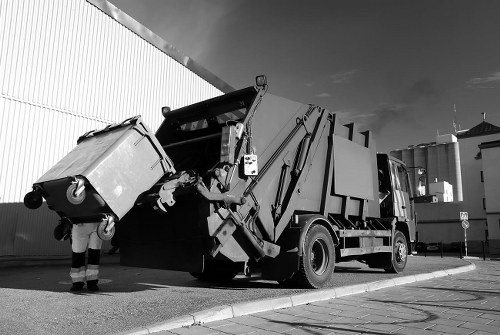 This Health and Safety policy sets out the principles, responsibilities and procedures that govern safe operations for our flat clearance and rubbish removal services. It applies to all staff, contractors and third parties involved in waste clearance, junk removal and household clearance tasks carried out on behalf of the company. The policy aims to protect employees, residents, members of the public and property while enabling efficient waste disposal and rubbish removal across our service area.
Our commitment is to meet and exceed legal requirements relating to waste clearance, manual handling and transport of refuse. Management will ensure adequate resources, training and supervision are provided. Every person involved in a clearance task must understand their role and adhere to safe systems of work. This document describes our approach to risk assessment, personal protective equipment (PPE), vehicle and site safety, hazardous materials handling and incident reporting.
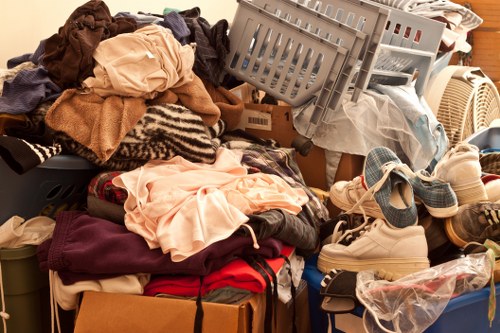 The scope includes domestic flat clearance, residual rubbish collection, bulky item disposal and light commercial waste removal. It excludes specialist hazardous waste that must be handled by licensed contractors; however, staff will be trained to identify and segregate potentially hazardous materials before removal. Our approach balances effective service delivery with a strong focus on risk reduction for both operatives and occupants. Safety controls are regularly reviewed and updated following incidents, changes in legislation or new equipment introductions.
Responsibilities and Training
Senior management is responsible for overall health and safety performance, ensuring policy implementation and resource allocation. Supervisors are charged with daily operational oversight, ensuring risk assessments are completed and safe working practices are enforced on site. Employees must follow instructions, use required PPE, report hazards and participate in training. Training covers manual handling, safe lifting techniques, use of mechanical aids, vehicle loading, customer interaction and identification of hazardous materials such as asbestos, sharps or chemical containers.
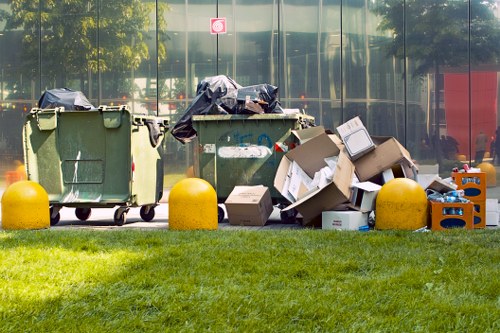 Before any flat clearance or rubbish collection, a documented risk assessment is completed that addresses access, stairways, lifting tasks, fall risk, containment of loose debris and potential asbestos or battery hazards. Controls include task planning, use of two-person lifts for bulky items, mechanical aids (trolleys and sack trucks), and temporary protection for floors and staircases. The risk assessment informs the required PPE which may include high-visibility clothing, gloves, safety boots, eye protection and respiratory protection when necessary.
We employ a permit-to-work approach for higher-risk tasks and provide clear written and verbal briefings at the start of each job. Records of training, toolbox talks and competency checks are maintained. Staff are encouraged to raise safety concerns without fear of reprisal and to stop work where immediate dangers are present. Supervisors will respond promptly to remedy issues and escalate where required.
Operational Controls, Vehicles and Equipment
Operational controls focus on preventing injury and damage during flat clearance operations. Rubbish collection teams must follow traffic safety rules, secure loads to prevent spillage, and ensure vehicles are in good working order. Regular vehicle inspections, maintenance logs and driver training are mandatory. Equipment such as lifting straps, ramps and mechanical trolleys must be inspected before use and stored securely when not in service.
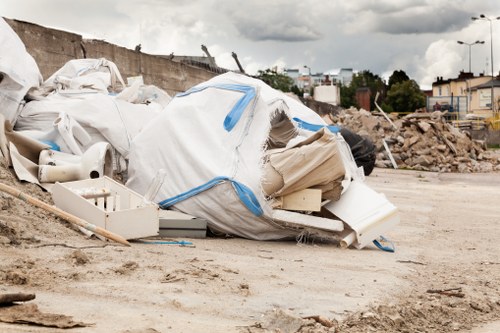
 Hazardous waste identification and segregation is a priority. Items such as solvents, batteries, paint, asbestos-containing materials and biohazardous waste are identified during the pre-clearance assessment and isolated. Where disposal requires specialist handling, the item is documented and arrangements made with licensed waste carriers; staff will not transport controlled hazardous waste in general refuse vehicles.
 Emergency preparedness covers first aid provision, reporting procedures for accidents and near-misses, and escalation to external emergency services where appropriate. All incidents are recorded, investigated and lessons learned are implemented into revised risk assessments and training programs. Regular audits and spot checks ensure compliance with this policy and identify opportunities for improvement.
Key elements of our safety programme include:
- Regular, documented risk assessments for each removal job
- Mandatory PPE and competency checks for all operatives
- Vehicle and equipment maintenance and safe loading procedures
- Clear hazardous waste segregation and escalation process
- Incident reporting, investigation and corrective action loops
Performance metrics such as accident frequency, near-miss reporting rates and audit findings are reviewed quarterly by management. This health and safety policy is subject to periodic review and will be updated to reflect regulatory changes, technological advances and operational feedback. By adhering to these standards, Flat Clearance Islington commits to delivering high-quality waste clearance, junk removal and rubbish removal services while maintaining a safe working environment for all stakeholders.